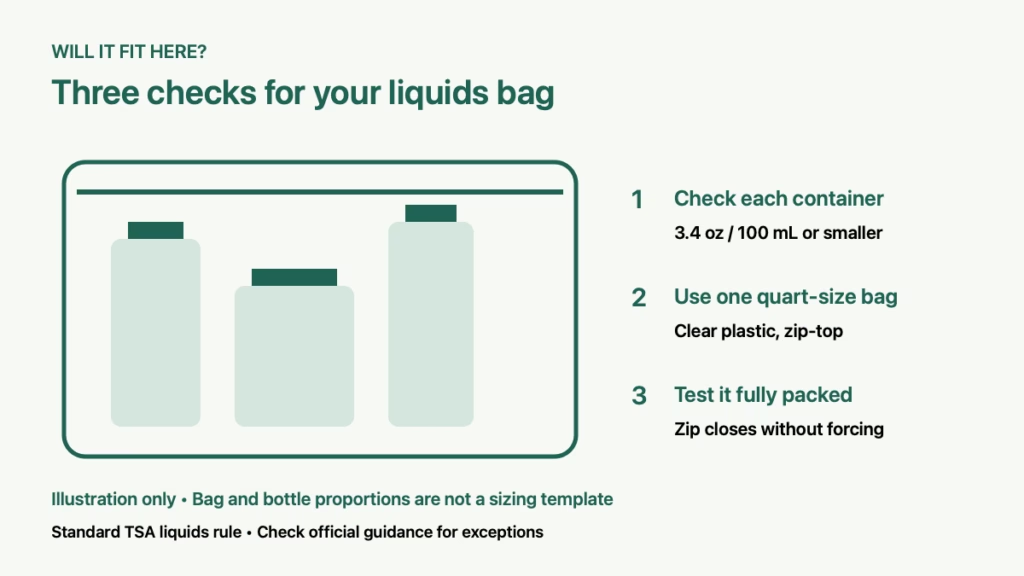
Quick answer: Your toiletries fit the standard TSA liquids rule when each liquid container is 3.4 ounces (100 milliliters) or smaller and all the containers fit together in one quart-size, clear, plastic, zip-top bag. Test the bag with everything you plan to carry and close it normally. A pouch described as “TSA approved” is not a guarantee that your particular packed toiletries will pass screening.
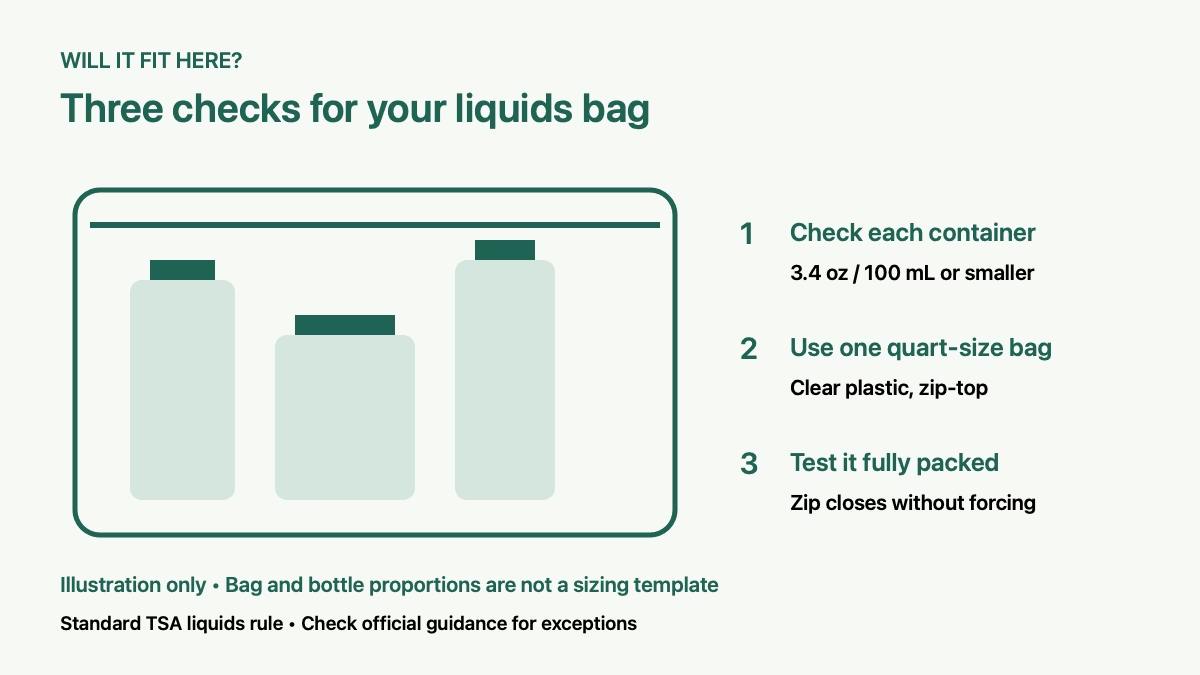
This guide is for the traveler who already has a toiletry pouch, several small bottles and an early flight. The practical question is whether that exact combination works. Check container eligibility first, then the packed bag; making an ineligible bottle fit physically does not solve the screening problem.
1. Check the TSA container size before arranging the bag
Read the capacity printed on every liquid, gel, cream, paste and aerosol container. Under TSA’s standard rule, the container must be 3.4 ounces or 100 mL or smaller. A large bottle with only a little product left inside is still a large container. Use an appropriately sized travel container, pack the item in checked baggage when permitted, or leave it behind.
Build a simple inventory on your phone: item, labeled capacity and whether it is a liquid-type product. Include toothpaste and creams in the check. This prevents the last-minute mistake of measuring shampoo carefully while forgetting a larger tube added at the end.
2. Choose a quart-size bag, not a universal inch measurement
TSA describes a quart-size clear plastic zip-top bag. Its guidance does not give a universal rectangular width and height that makes every reusable pouch compliant. Flat bags and bags with gussets have different shapes; measuring two outside edges does not prove their capacity.
If you are unsure about a reusable pouch’s size, a clearly labeled quart-size clear zip-top bag gives you a straightforward reference. Do not substitute a gallon-size bag because it folds down around a small collection. Product marketing and an airport security decision are separate things.
3. Pack your actual toiletries and test the closure
Arrange the containers with their caps closed. Put bulky lids at opposite ends, lay flatter tubes beside bottles and try a second arrangement before deciding you need a bigger bag. Leave the zipper track clear of caps and corners. Close the bag without pulling hard on its seams or holding the sides together.
This is a practical packing test, not an official promise of acceptance. If closure requires force, reduce the number of items or use smaller containers rather than trying to stretch the bag. Photograph the successful arrangement so you can repack it after a hotel stay.
4. Separate the liquids bag from the rest of your toiletry kit
Your toothbrush, comb and other non-liquid essentials do not all need to occupy the liquids bag. Keeping them separately can free usable space. Check unusual products with TSA’s official “What Can I Bring?” guidance instead of assuming every cosmetic is treated alike.
Keep the liquids bag accessible in your carry-on. Screening procedures can vary, so follow the instructions at your checkpoint. A well-organized bag helps you present the items when requested, but organization alone does not change the rules.
5. Check exceptions and the rest of your journey
Medically necessary liquids and other qualifying exceptions have separate TSA guidance. Do not discard something essential merely to make this ordinary toiletries checklist work; consult the relevant official instructions for your situation. Airports outside the United States may apply different rules, including at a connection or on your return trip.
The toiletries check is also separate from your airline’s bag allowance. If your whole backpack is the problem, see our Frontier personal-item fit guide or easyJet underseat-bag guide. Passing a liquids check does not establish that the outer bag meets an airline limit.
What to do if the bag does not fit
Remove duplicate products, take only the amount you need in suitable containers, and review which items can travel in checked luggage. Re-test after adding sunscreen, contact-lens solution or another last-minute product. There is no reliable fixed bottle count: a bottle’s cap, thickness and shape can consume more space than its capacity suggests.
Sources and measurement notes
Standard-rule facts were checked against TSA Travel Tips and the official TSA liquids-rule guidance for this October 6, 2026 guide. Check those sources before traveling. The packing method is a practical fit check; the final screening decision rests with TSA.