Quick answer: A TV should be mounted vertically only when the exact display and mounting system approve that orientation. Matching VESA holes, a square bolt pattern or software that rotates the picture does not establish physical portrait-mounting compatibility. Check both manuals before buying a rotating bracket.
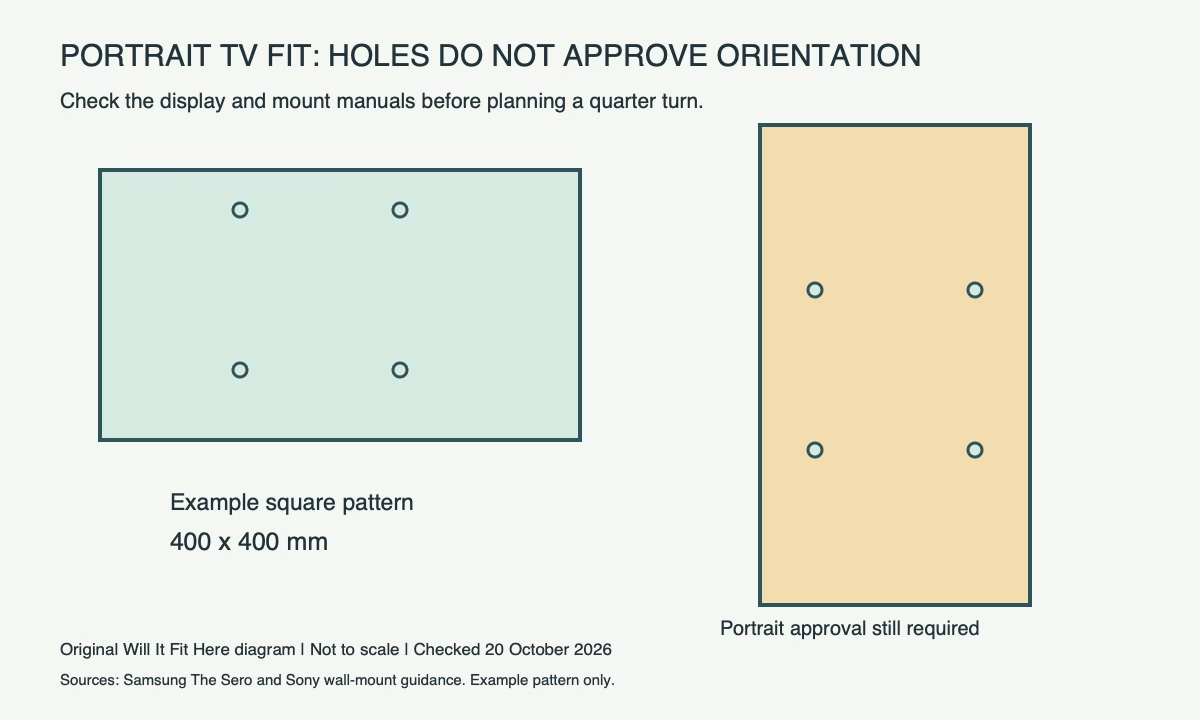
Separate image rotation from hardware approval
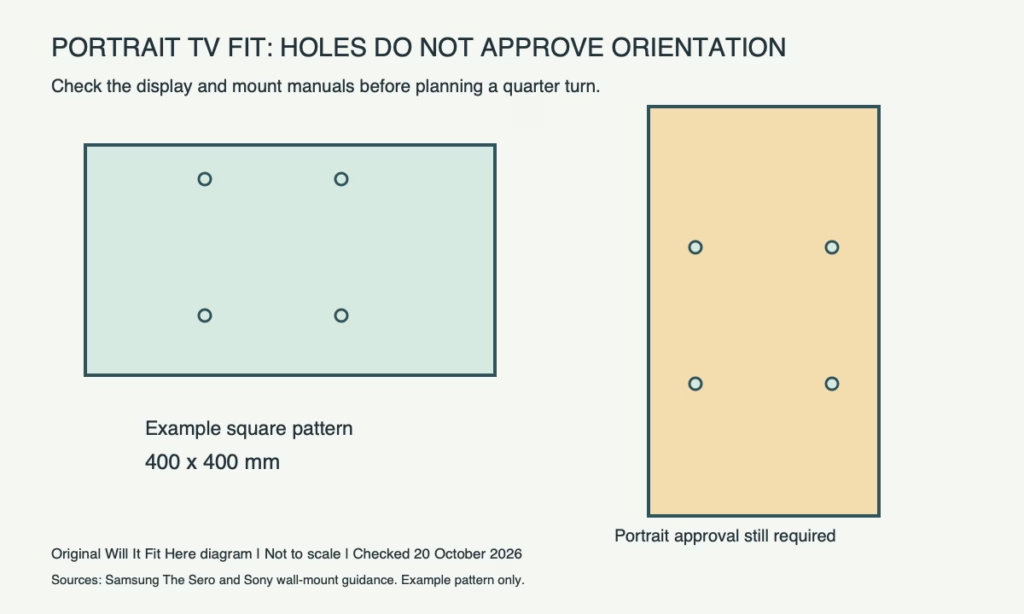
A video app can display vertical content inside a landscape screen without the television itself moving. Conversely, a bracket may rotate while the TV’s specified installation orientation remains unchanged. Find an explicit portrait or rotation statement for the complete TV model number and the bracket.
Samsung’s The Sero is a particular product designed with portrait operation, as its linked support guide explains. That is an example of model-specific support, not permission to turn another Samsung television on its side. Professional displays can have different instructions again.
Record holes, body and moving envelope
Measure the horizontal and vertical distances between mounting-hole centres. A hypothetical 400 × 200 mm pattern becomes 200 × 400 mm relative to the room after a quarter turn. A square 400 × 400 mm pattern keeps its dimensions, but that fact says nothing about ventilation, screw loading or panel support.
Use the manufacturer’s overall body dimensions, not an ideal screen diagonal. A hypothetical body 145 × 84 cm needs approximately 84 cm of width and 145 cm of height in its final portrait position, plus all required clearances. Its corners sweep a larger intermediate area during rotation.
- TV manufacturer explicitly permits the orientation and any operating restrictions.
- Mount approves that orientation, display weight and exact hole pattern.
- Correct screws, spacers and attachment points specified by the manuals.
- Rotation path clears walls, shelves, soundbars and people.
- Cables remain supported and unstrained throughout permitted movement.
Plan the corner sweep before drilling
Draw the full body outline on cardboard and trace the proposed rotation around the specified mounting axis. The axis may not be at the screen centre. A final-position rectangle alone can miss a corner that hits a shelf halfway through a turn. Have the installer resolve the plan if the manuals or mounting position are unclear.
Common questions
Will any VESA-compatible rotating mount work? No. See our existing mount compatibility guide for the other mounting checks, then confirm portrait approval separately.
Can I leave the TV sideways if the picture looks correct? Image appearance is not an installation approval. Follow the exact display manual.
Official sources and scope
Checked October 20, 2026: Samsung Hong Kong The Sero portrait guide and Sony TV wall-mount measurement guidance. Example dimensions are hypothetical; no firsthand mounting or universal orientation approval is claimed.