Quick answer: Cargo fits under a tonneau cover only if its packed shape clears the lowest part of the installed cover system and the cover can operate and latch normally. Measure from the actual cargo-support surface to rails, supports and latches, then check any canister or folded-panel space. A pickup’s bed-rail height is not a universal covered-cargo allowance.
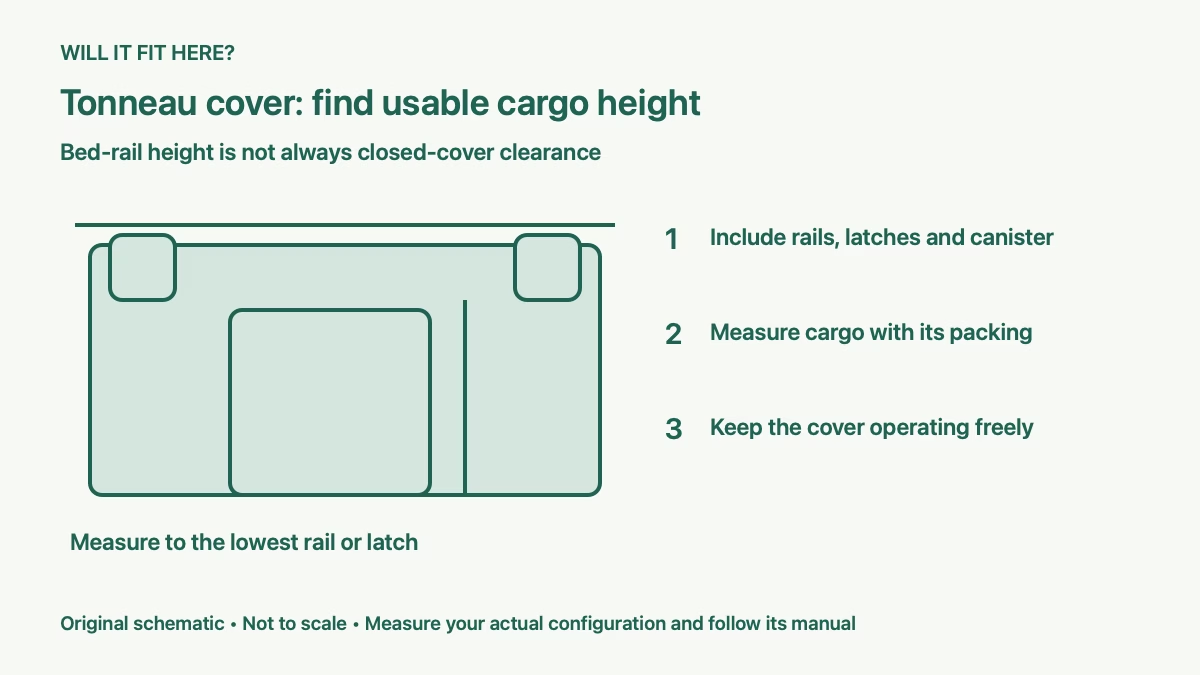
1. Identify your installed tonneau cover
You want to transport a cooler, storage box or tool case with the bed covered, but the box’s height is close to the bed sides. Start with the exact cover model and installation. A different truck with the same bed length may have a different cover system, liner or mounting arrangement, so a forum photo is not enough to confirm the remaining space.
Read the cover maker’s installation and operation instructions. RealTruck’s official cover-type overview distinguishes folding, rolling and retractable designs, including retractable designs with a bulkhead canister. Those structures explain why you must check the installed system, rather than apply one clearance number to every cover. Use the manufacturer’s guidance for permitted travel positions and loading restrictions.
2. Measure the lowest tonneau cover clearance
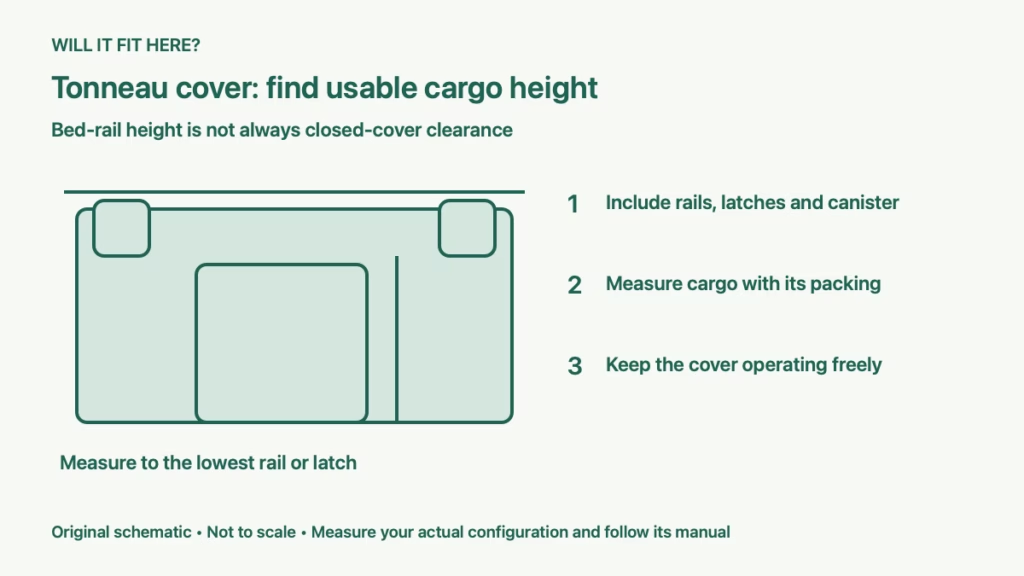
With the truck safely parked, inspect the underside of the system using the access allowed by its instructions. Measure vertically from the surface supporting the cargo to the lowest obstacle over the intended placement. Include rail brackets, cross supports, latch bodies and any cable or mechanism that must move freely. Do not put a person inside the bed under a closed cover to measure it.
Check several positions along the bed, because the lowest point may be near a rail or the tailgate rather than the center. A straightedge at a known reference height can help map the clearance while the cover is open, but confirm how the installed cover sits when normally closed. An uncertain projection measurement should lead to a careful trial, not a fit guarantee.
3. Include the full packed cargo height
Measure the item with its feet, handle, lid, padding and restraint arrangement in place. A cooler handle that folds flat is different from one that remains upright; check what you can actually reproduce. Include a bed mat, pallet or protective base under the load when it changes the cargo-support height.
For an illustrative calculation, if your own measurement gives 19 inches to the lowest obstruction and the packed item is 18.5 inches tall, the apparent difference is only half an inch. That difference must accommodate the reliability of your measurement and the real operating arrangement. These are example numbers, not a truck or cover specification. Do not assume a close arithmetic result proves practical fit.
4. Check tonneau cover depth and operating space
A retractable cover’s canister can reduce usable depth near the cab. A folding design can occupy a different area when stacked, while rails may reduce usable width. Map those obstacles against the load’s footprint and its top corners. A short box may fit below the cover but still block a mechanism or a place where a panel needs to move.
Operate the empty tonneau cover first as instructed so you understand its normal path and latch feel. Then trial the proposed load carefully, keeping hands clear. Do not push a powered or tensioned mechanism against the cargo. A soft cover that happens to stretch over an item is not proof that the maker permits that arrangement.
5. Verify closure and the transport plan
The cover and tailgate should close normally, with every required latch engaged and nothing pinched. Secure cargo independently using the truck’s appropriate anchors and instructions. Do not treat contact with the underside of the cover as restraint. Check vehicle payload and the item’s handling requirements separately from the physical clearance result.
A cover’s advertised load rating, if any, is a different specification from the space available underneath it. Read exactly what that rating describes rather than using it to justify pressing cargo against a panel. If the load interferes with the cover, choose a permitted open-cover arrangement or another transport method according to the actual maker’s instructions.
Before collecting the item
Record the installed tonneau cover’s minimum height, usable footprint and operating space, then compare those with the packed item. A real trial is particularly useful near a rail or canister. The pickup-bed plywood guide covers a different flat-load problem; the SUV closed-hatch guide shows the same principle of checking the final enclosed shape.
Accept fit only when the cargo clears the installed obstacles, the tonneau cover operates freely and the separate restraint plan works. Keep your measurements with the cover model so a later replacement does not inherit an unsupported fit assumption.