Quick answer: An antenna needs to pass the access hatch, assemble in the attic and point toward the required transmitters without hitting the structure. Physical fit still does not guarantee reception through the roof.
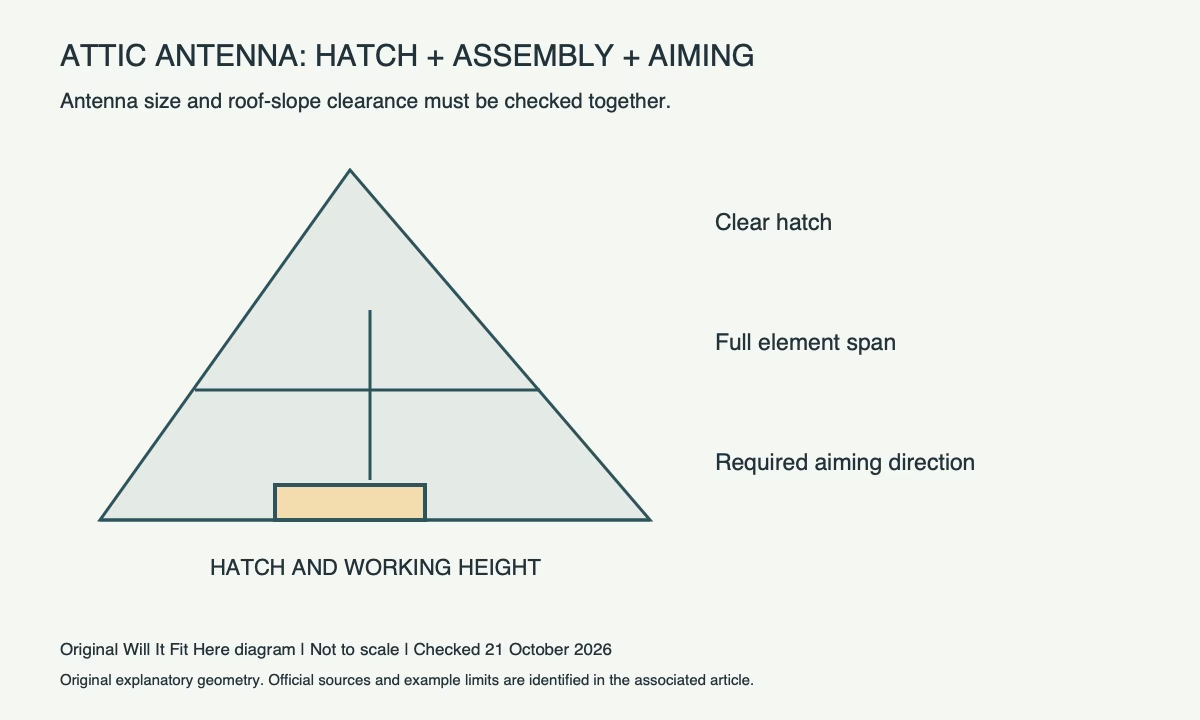
Separate transport size from operating size
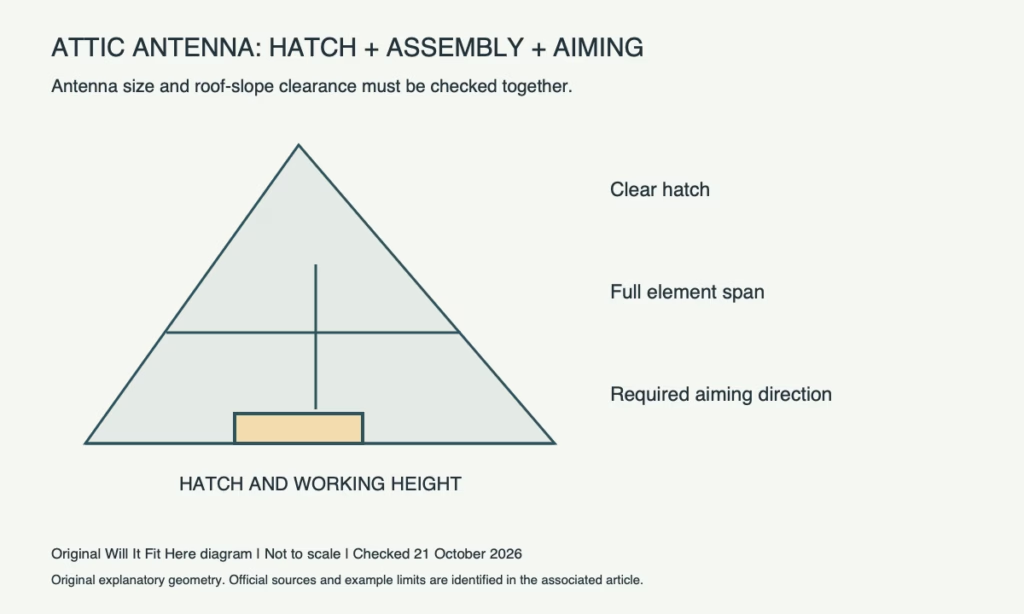
Get the exact antenna’s assembled dimensions, mounting instructions and any permitted folded configuration. Measure the hatch’s clear opening and the space above it. A long boom may pass through a hatch on end but be unable to turn beneath a low roof.
For an illustrative antenna 900 mm long and 600 mm wide, a 500 mm-wide hatch rejects a straight flat pass across its width. A different orientation may be possible only if the actual height, depth and handling route allow it. These are hypothetical antenna dimensions, not specifications for Channel Master’s STEALTHtenna 50.
Draw the aiming envelope
Mark the mast position and the antenna’s furthest elements on a plan of the usable attic. Check the intended direction and adjustment range against rafters, ducts and stored items. A directional antenna that fits only when pointing away from the required towers has not passed the operating-fit check.
| Stage | Measurement |
|---|---|
| Access | Clear hatch and turning space on both sides |
| Assembly | Complete element span and room for permitted assembly |
| Aiming | Space at the selected heading and adjustment range |
| Service | Safe access to mount and coax connections |
Keep reception as a separate test
Channel Master’s STEALTHtenna 50 support guidance allows attic installation where physical space and sufficient signal margin are available, while preferring outdoor installation for reception. Roofing, insulation, radiant barriers and other materials can alter the signal. A claimed range or a successful installation in a different house does not establish yours.
Use the antenna maker’s planning tools and assess reception at the proposed location before a permanent installation where practical. Do not step on unsupported ceiling materials, alter structural members or work near electrical hazards to make an antenna fit. Have a qualified installer assess difficult attic access and the complete mounting arrangement.
Before you decide
- Actual antenna and permitted transport configuration identified.
- Hatch, approach and assembly space measured.
- Required aiming direction clears structure and services.
- Safe access and reception assessment planned independently.
Common questions
Does enough attic floor area prove fit? No. Roof slope and the antenna’s width at operating height can be the limiting dimensions.
Will a signal amplifier solve every attic installation? No. It cannot make an antenna fit or guarantee usable signal quality through the building.
Official sources and scope
Checked October 21, 2026: Channel Master STEALTHtenna 50 support and installation guidance. Confirm the exact product, route or current policy before acting. No firsthand fit test is claimed.
Related guide: TV Cable Clearance: 5 Simple Niche Fit Checks. This addresses a separate fit check; its measurements do not transfer to the products above.