Quick answer: A windshield sunshade fits when its outline and mounting method suit the actual glass and mirror/sensor area, not merely when one advertised width is close. Confirm the exact vehicle application or the universal shade maker’s measuring instructions. Remove the shade before driving.
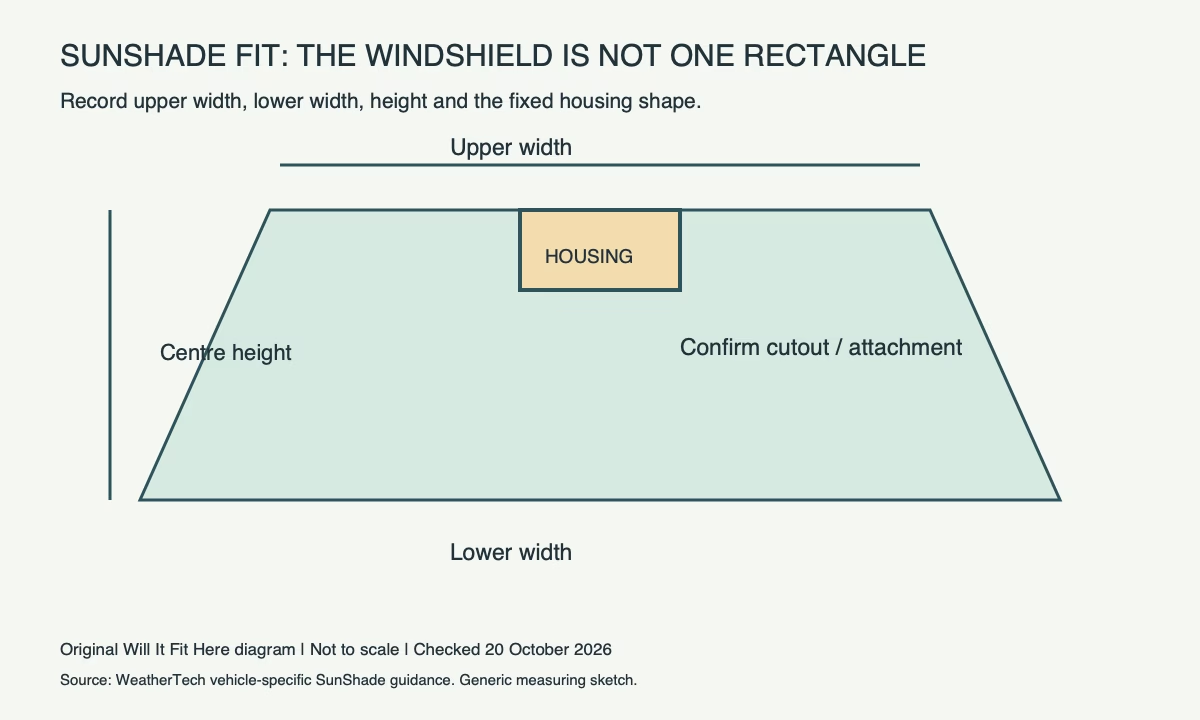
Measure the glass shape the shade must cover
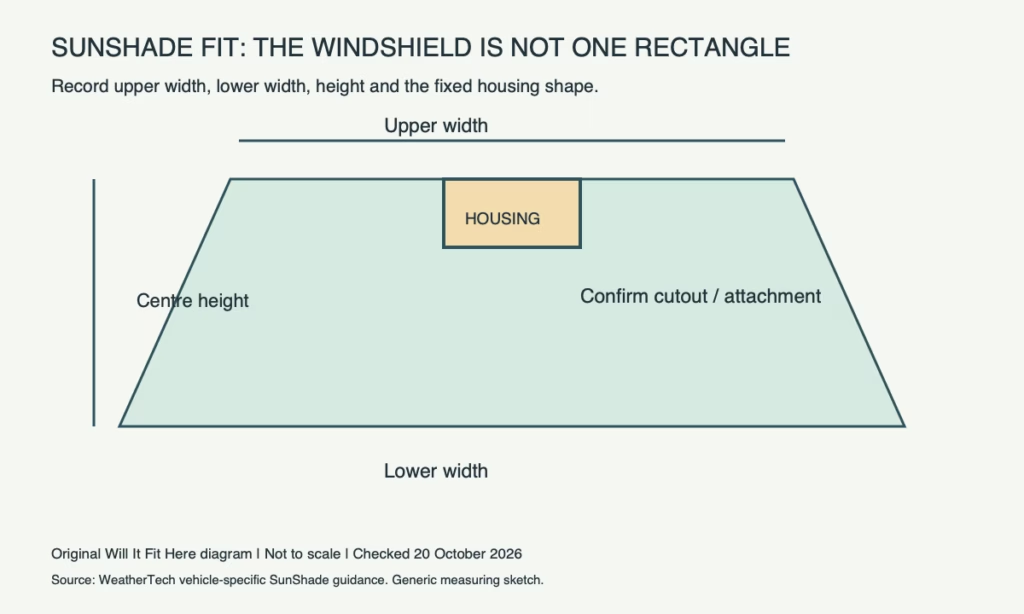
With the vehicle safely parked, follow the shade supplier’s specified reference points. Record the upper and lower widths, centre height and the area occupied by the rear-view mirror and any fixed housing. Keep glass coverage and the surrounding trim opening distinct.
A hypothetical glass outline 140 cm wide at the bottom and 125 cm at the top cannot be described fully by “140 cm wide.” A rectangular shade 140 × 80 cm may still bunch at the top, leave side gaps or meet the mirror housing. Those are example measurements, not dimensions of a named car.
Match the vehicle details before buying a custom shade
WeatherTech’s US SunShade selector asks for year, make and model. Use the exact current vehicle details and any application notes. Do not assume the same model name means the same windshield across generations or that a full-vehicle kit contains the same pieces for every body style.
For a universal folding or spring-frame shade, check its permitted mounting and folding method as well as its nominal size. Do not press a rigid edge against a camera housing, mirror mounting point or delicate trim to make a near match stay in place.
Make a fit record that includes storage
- Upper width, lower width and centre height, measured as the supplier directs.
- Mirror/sensor housing shape and required clearances.
- Visor or other approved retention method.
- Shade orientation and the maker’s permitted folding/rolling method.
- Closed package length, diameter or folded outline, including the retaining strap.
Check the folded shade against its planned storage space. For an illustrative rolled shade 80 cm long and 12 cm across, a 75 cm-long door pocket is not established as a fit by having enough volume. The entrance, end clearance and a secure travel position matter too. Do not leave it loose near the driver’s pedals.
Common questions
Can I trim a custom shade around the sensor? Ask the manufacturer. Cutting or changing its structure may compromise the intended fit and storage method.
Will a larger shade provide better coverage? Only if it can sit in the approved position without folding against fixed hardware. Excess width can make retention worse.
Is width measured along the curved glass? Use the supplier’s method; a curved-surface distance and a straight-line span are different. For another cabin-access issue, see car-door clearance beside storage.
Official source and scope
Checked October 20, 2026: WeatherTech US SunShade vehicle selector and product guidance. This is a measuring method, not a claim that one shade fits multiple generations. All example dimensions are hypothetical; no firsthand vehicle measurement is claimed.