Quick answer
Nominal air filter size is the shopping label; actual size is the filter’s physical outside length, width, and depth. To find a replacement, identify the filter cabinet or grille and its required part, then compare the candidate’s actual dimensions and compatibility listing.
A shared label such as 20×25 does not make filters interchangeable. If a replacement binds, leaves a bypass gap, or prevents the access door from closing normally, stop and verify it. Correct dimensions also do not, by themselves, establish that the filter’s airflow performance suits your HVAC system.
What nominal and actual size mean
The large numbers on a filter frame are often a nominal size, written as length × width × depth. For a 20×25×4 label, those numbers describe a nominal size category in inches. They do not promise a frame measuring exactly 20 by 25 by 4 inches.
The actual size is the outside measurement of the finished frame. It may be printed nearby in smaller type or provided in the manufacturer’s specifications. Keep the depth separate from the two face dimensions: a filter that looks right from the front can still be too thick or too thin for its track.
Air Filters Inc.’s nominal/actual guide shows that undercut dimensions vary among its stock sizes. Use a size chart only for the products it describes. There is no single subtraction or “always round up” formula that identifies every compatible replacement.
For US products, retain the published inch fractions when comparing parts. You can add metric measurements to your notes, but do not round them enough to erase a mismatch. One inch equals 25.4 mm; 1/8 inch equals 3.175 mm.
Find the intended filter before copying the old one
Photograph the old filter’s entire label and the accessible label on the filter cabinet or return grille. Record the brand, exact model, filter part number, nominal size, actual size, and airflow arrow. A furnace model is useful, but a separately installed filter cabinet may have its own replacement requirements.
Start with the cabinet’s manual or manufacturer replacement table. Use the old filter as supporting evidence, particularly if it fit properly and is the documented part. A previous owner could have installed the wrong size, so a loose or crushed old filter should not become your buying template.
A part-number example from an actual manual
The Resideo F100/F200 quick-start guide, revision 33-00240EF-05, lists FC100A1037 for the F100’s 20×25 size and FC200E1037 for the F200’s 20×25 size. That is a specific cabinet-family and replacement-part relationship, not permission to use any filter sold as 20×25.
The same manual contains an air-cleaner cabinet drawing. Its outside cabinet dimensions must not be copied as the filter’s actual size. Check the replacement table and the filter specification separately.
If you cannot find the intended part, send the cabinet manufacturer or HVAC technician the labels and photos. Do not infer compatibility from the brand name alone; one brand can use several cabinet families.
How to measure the actual filter frame
Follow the equipment’s filter-service instructions. American Standard’s filter guide starts by turning the HVAC system off. Wait for the fan to stop, then use only the normal filter-access door or grille. This guide does not call for removing electrical, gas, or blower-compartment parts.
- Remove the old filter normally. Note its arrow and orientation, but verify those against the equipment instructions rather than assuming they were correct.
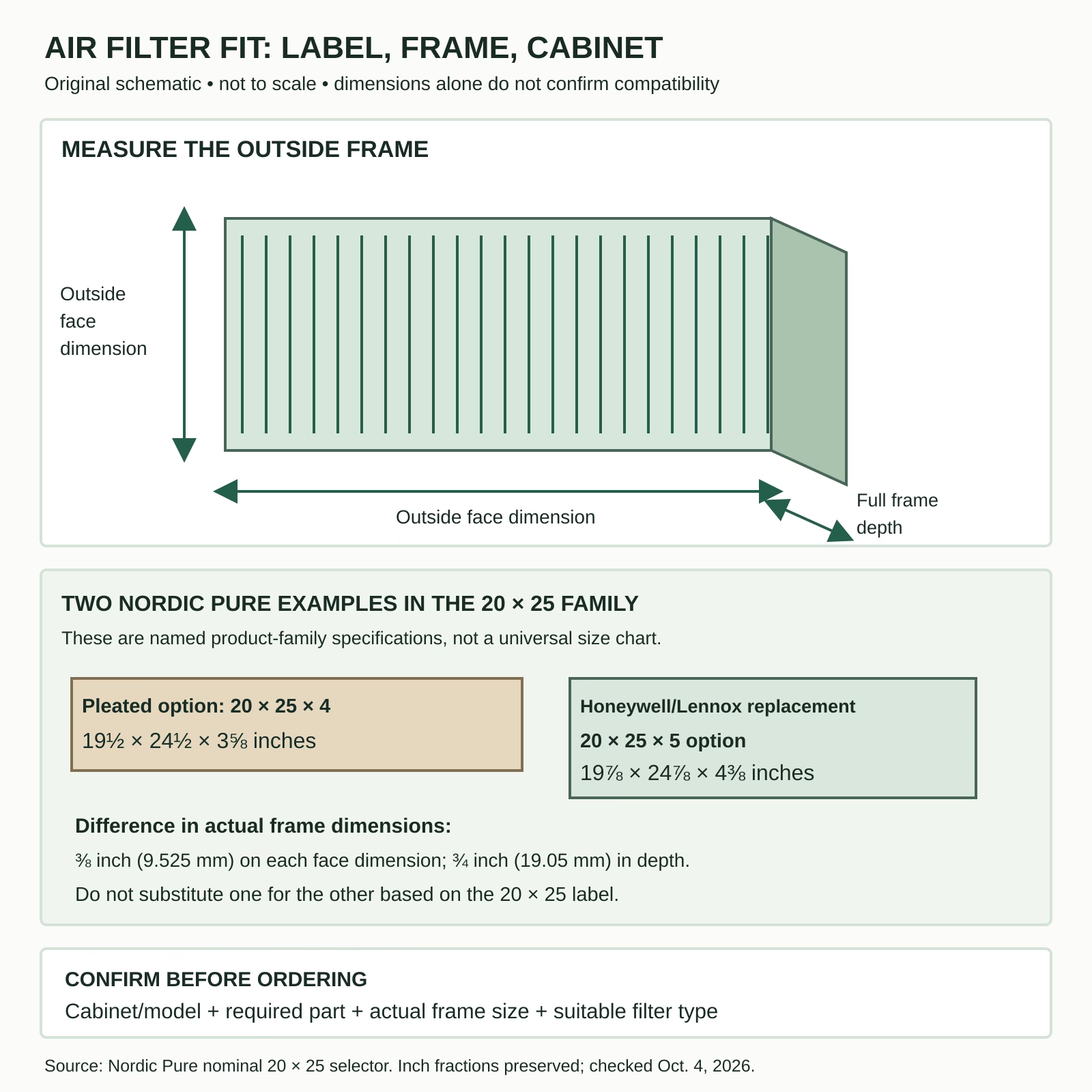
- Measure the outside face dimensions. Place a rigid ruler or tape across each outside edge of the frame. Measure the frame, not the exposed pleated media.
- Measure the full depth. Measure perpendicular to the face, across the frame thickness. Include the complete frame profile; do not flatten it.
- Record each actual measurement and the printed label separately. Note any bent corners, swelling, crushing, gasket, or unusual lip. A damaged frame may no longer reflect its original dimensions.
- Compare with the candidate’s exact specification. Confirm all three dimensions, the frame style, and the intended cabinet or replacement-part listing. If the listing omits actual size, ask before ordering.
If no old filter is available, identify the cabinet or grille first. Measurements of accessible tracks can help a manufacturer resolve the part, but the access opening is not necessarily the intended filter size. Allowances for rails, retaining features, and seals are design-specific. Do not buy a filter merely because its label resembles the opening.
Why 20×25×4 and 20×25×5 need a closer look
Nordic Pure’s nominal 20×25 selection page separates several different 4- and 5-inch-depth product families. Here are two of its named options:
| Nordic Pure option | Actual inches | Calculated millimeters |
|---|---|---|
| Pleated option linked as 20×25×4 | 19-1/2 × 24-1/2 × 3-5/8 | 495.3 × 622.3 × 92.075 |
| Honeywell/Lennox replacement option linked as 20×25×5 | 19-7/8 × 24-7/8 × 4-3/8 | 504.825 × 631.825 × 111.125 |
Those fractional dimensions differ by 3/8 inch (9.525 mm) in each face direction and 3/4 inch (19.05 mm) in depth. Nordic Pure also displays rounded decimals; the calculations here use its listed fractions.
This comparison explains why a broad 20×25 search can return unsuitable products. It does not establish that either option fits your cabinet, or that these are universal Honeywell or Lennox dimensions. The brand-replacement description still needs to match the particular cabinet and part.
The two product pages are Nordic Pure 20×25×4 and Nordic Pure 20×25×5. Recheck the selected variant’s specifications before ordering.
What a fit check can and cannot confirm
Once you have a documented compatible replacement, fit it following the equipment instructions. The frame should seat in its intended rails or retainers without being crushed, and the normal access door should close as designed. Verify the airflow arrow against the system’s airflow direction; Resideo’s guide specifically requires the arrow to point with the airflow.
Look for an unintended gap that could allow air to pass around the filter instead of through it. Some assemblies use intentional clearances and manufacturer-designed seals, so there is no universal “acceptable gap” to measure with a ruler. A loose filter, unexpected edge gap, or missing seal needs a model-specific answer.
- Too large or too thick: do not force, trim, or compress it.
- Too small or too thin: do not fill the space with improvised foam, tape, spacers, or stacked filters.
- Door will not close: stop rather than bending the frame or leaving the door open.
- Uncertain orientation or retention: consult the manual or technician before restarting.
Physical fit is only one check. Filter media and airflow resistance must suit the equipment. Do not choose a higher MERV rating solely because the frame fits, or assume equal MERV ratings guarantee equal pressure drop. Follow the system’s requirements and seek an HVAC assessment if changing the filter type or rating.
A different filter thickness is not a simple upgrade unless the cabinet and system support it. If the documented replacement still does not seat normally, have the cabinet, track, and part identification checked instead of modifying them.
A replacement-filter worksheet to keep
Save this information in a note or photograph it with the labels. It makes future reorders much easier.
| Equipment requirement | Existing filter | Candidate replacement |
|---|---|---|
| Cabinet/grille brand and model | Brand and part number | Exact product and selected variant |
| Manual’s required replacement part | Printed nominal size | Listed nominal size |
| Frame, rail, gasket and retention requirements | Actual length × width × depth; damage or unusual features | Published actual dimensions and frame design |
| Approved filter type and system requirements | Printed rating, if legible | Compatible type/rating confirmed for this system |
Ready to order: the equipment requirement and candidate agree, dimensions and frame design are confirmed, and the filter type is suitable.
Remeasure or ask: the old frame is distorted, an actual dimension is missing, or only the nominal labels agree.
Stop that substitution: documented dimensions conflict, the cabinet is not supported, or the filter requires force or improvised sealing. Ask for the correct replacement rather than making a near-match fit.
Common air filter sizing questions
Are all 20×25×4 air filters the same size?
Do not assume so. Check the actual dimensions of the exact product and the cabinet’s requirements. A nominal label is not a complete compatibility specification.
Can I put a 4-inch filter in a 5-inch cabinet?
Only if that cabinet’s documentation explicitly supports that filter and arrangement. The labels alone do not tell you the physical depth or how the filter is retained and sealed.
Should I round my measurement up?
You may use the nearby nominal size to search, but keep the actual measurements unchanged for the fit check. Rounding does not identify the correct replacement part.
Can length and width be reversed?
Listings may name the two face dimensions in different orders. Match the physical shape, then check orientation, frame features, and airflow direction. Do not interchange the depth with a face dimension.
The old filter fits. Can I just reorder it?
A verified correct part is a useful starting point. Confirm the exact SKU and specifications, especially if the packaging or brand has changed. A filter merely sliding into the opening is weaker evidence than the cabinet’s documented replacement listing.
Sources and measurement notes
- Air Filters Inc.: nominal versus actual size and its product-specific stock table.
- Nordic Pure: nominal 20×25 family selector, including exact fractional dimensions for the examples.
- Resideo Media Air Cleaners quick-start guide 33-00240EF-05, May 2023, replacement table on page 2.
- American Standard: furnace filter sizes, system-off and compatibility guidance.
Sources checked October 4, 2026. This guide addresses US residential replacement-filter sizing. Metric example dimensions are calculated from the listed inch fractions, not manufacturer tolerance specifications. The drawing and numerical comparison are original editorial illustrations; no hands-on fit or airflow test is claimed.