Result — Conditional. For shelf planning, measure the complete closed SINGER hard case with the machine and accessories packed as intended. The current US page’s highlights list outside dimensions of 20.5 × 11.8 × 14.8 inches, but a separate FAQ gives a different approximate figure. Identify your actual case and confirm its exterior before relying on a close shelf fit.
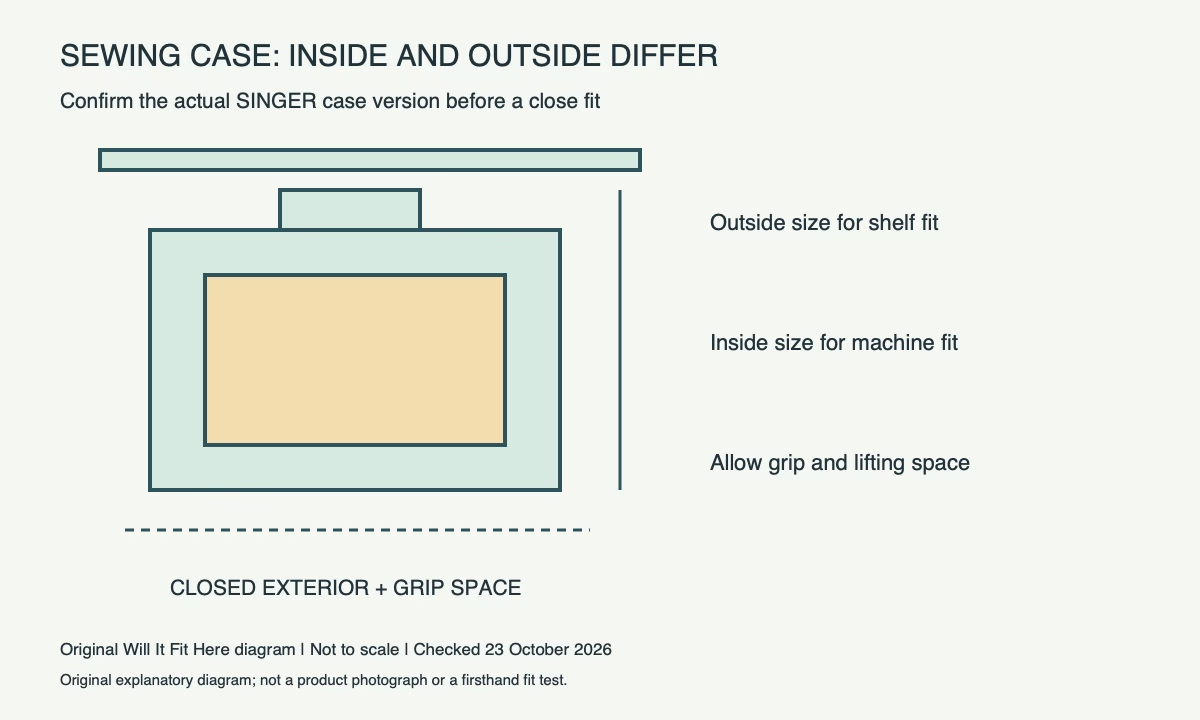
1. Identify the SINGER hard case version
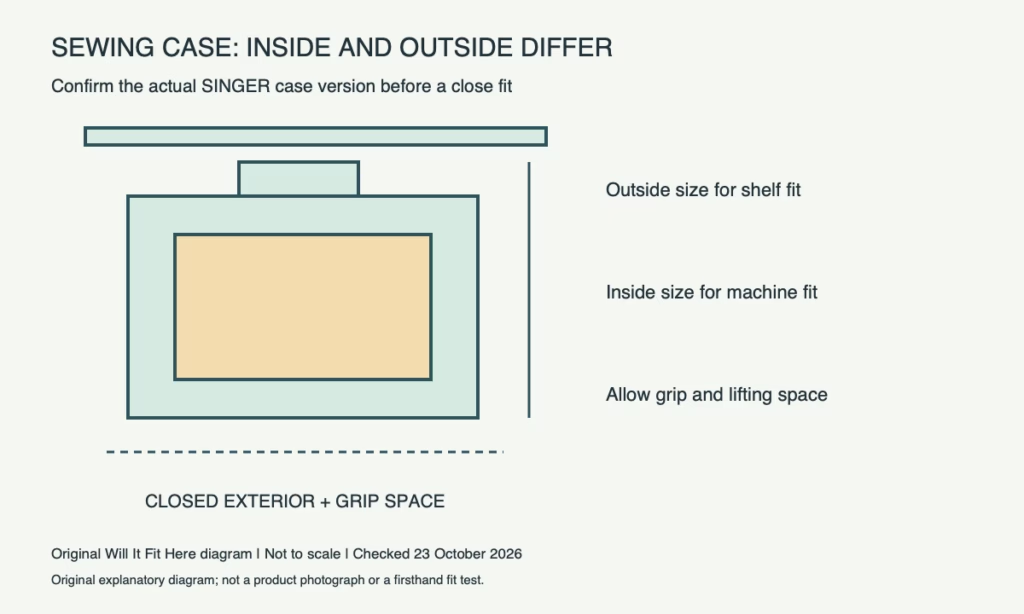
A product described as universal is not necessarily one unchanging physical shell. Check your case label, package identification and the current listing for that version. This guide concerns the SINGER Universal Sewing Machine Hard Case page linked below. Its outside-size highlights and approximate FAQ-size answer conflict, so they should not be combined into a single invented specification. For a purchase that depends on a few millimetres, obtain the seller’s or manufacturer’s confirmation of the exact supplied case.
2. Dimensions: choose outside size for shelf space
The page’s highlights give a 20.5-inch length, 11.8-inch width and 14.8-inch height for the exterior, alongside rounded metric figures of 52 × 30 × 38 cm. Use one consistent unit and confirm the actual orientation. The interior figures serve the separate question of whether a sewing machine fits inside. They cannot establish shelf clearance. In a hypothetical 14-inch-high opening, a case matching the listed 14.8-inch exterior height would be 0.8 inch too tall before adding any handling space.
| Check | Reference / action |
|---|---|
| Check | Measurement / qualification |
| Current US highlights exterior | 20.5 L × 11.8 W × 14.8 H in |
| Rounded metric exterior | 52 × 30 × 38 cm on the same page |
| Conflicting FAQ figure | 17 × 8.5 × 12 in; confirm the actual supplied version |
| Shelf comparison | Complete actual closed exterior and narrowest opening |
| Additional room | Hands, lifting route, latches and any lid movement |
3. Measure the shelf opening and usable cavity
Measure the narrowest front opening and the space farther back. A lip, adjustable shelf bracket, hinge, sloping wall or cabinet back can reduce the cavity. Include the closed latches and any protruding feet or handle in the actual case measurement. A paper footprint or light mock-up can help check a turn into a corner cabinet before loading a heavy case. Do not judge the opening using only the storage unit’s external width or the space between its outer side panels.
4. Plan a controlled lift and retrieval
Measure the route used to place the case on the shelf, including room for your hands and the normal grip on the handle. A cavity that exactly accepts a closed rectangle may leave no practical way to lower it into place or retrieve it. Check the shelf’s permitted load against the real packed case weight; the empty shell and the sewing machine are separate contributions. Do not assume a nominally fitting case makes a high or awkward shelf suitable for frequent handling.
5. Separate closed storage from opening the case
If you plan to open the case on the shelf, follow the actual lid and latch arrangement and measure that movement independently. Otherwise, plan a stable work surface where the closed case can be moved and opened normally. Keep the intended machine retention and accessory packing arrangement rather than allowing loose parts to press against the lid. Recheck the outside envelope and handling route if you change the machine, add protective padding or replace the case with another version.
Before you decide
- Identify the exact case rather than relying on universal wording.
- Resolve the conflicting catalogue figures before a close purchase.
- Measure the complete exterior, shelf opening and lifting route.
- Check packed weight, shelf rating and the intended opening location.
FAQ
Can I use the inside dimensions to plan the shelf?
No. The shelf receives the outside of the case, including any protrusions, not its internal cavity.
Should I average the two conflicting catalogue figures?
No. They do not establish a valid intermediate specification. Confirm the actual case version and measure its exterior.
Official sources and scope
Checked on 23 October 2026. These references apply to the identified product, version and region. Follow its matching current instructions. Any worked measurement example is hypothetical.